
Eco-Friendly and Sustainable Tires for Electric Vehicles
Introduction
The topic of "green" tires has increasingly gained traction in media headlines and consumer discussions, often leading to a proliferation of misconceptions. Navigating through eco-friendly claims and marketing buzz can be challenging, and understanding what's genuinely sustainable versus what's merely branded as "green" is crucial. This article aims to cut through these complexities by examining the technology, certifications, and real-world performance behind eco-friendly tires. By clarifying common misconceptions, we will guide you to make informed choices based on facts rather than marketing headlines.
The Cost of "Green" Choices — What’s Hidden Behind the Price Tag of Eco-Tires
Have you noticed that tires labeled "eco" for electric vehicles cost 20–35% more than conventional ones? Take the Continental EcoContact 6 EV, for example: €220 versus €160 for its non-eco counterpart. Manufacturers cite innovations, but behind this often lies simple math: 60% of the technologies in these tires are tweaks to older designs. Yet the price tag is just the surface. To understand what you’re paying for, dig deeper.
Consider recycled plastic. Continental’s ContiRe.Tex technology transforms discarded PET bottles into polyester for tire cords. Each tire uses up to 15 bottles, with a set of four rescuing around 60 from landfills. Producing this recycled polyester consumes 60% less energy than virgin materials, shrinking the carbon footprint. Durability? Tests confirm that recycled cords match traditional ones. But there’s a catch: microplastics from tread wear still pollute the environment. So while PET bottles get a second life, the contamination problem persists — just in a new form.
Plant-based oils are another "green" move. Rapeseed oil, wood-processing waste, or sunflower substitutes replace petroleum-based additives in rubber compounds. This not only reduces oil dependence but also enhances performance: rapeseed oil, for instance, keeps tires flexible at -20°C, improving grip on winter roads. Continental even claims such tires sometimes outperform conventional ones in braking. Yet paradoxically, eco-friendliness and safety come at a premium due to R&D costs. Still, since the 2010s, brands like Nokian have mainstreamed bio-oils, making the tech far from experimental.
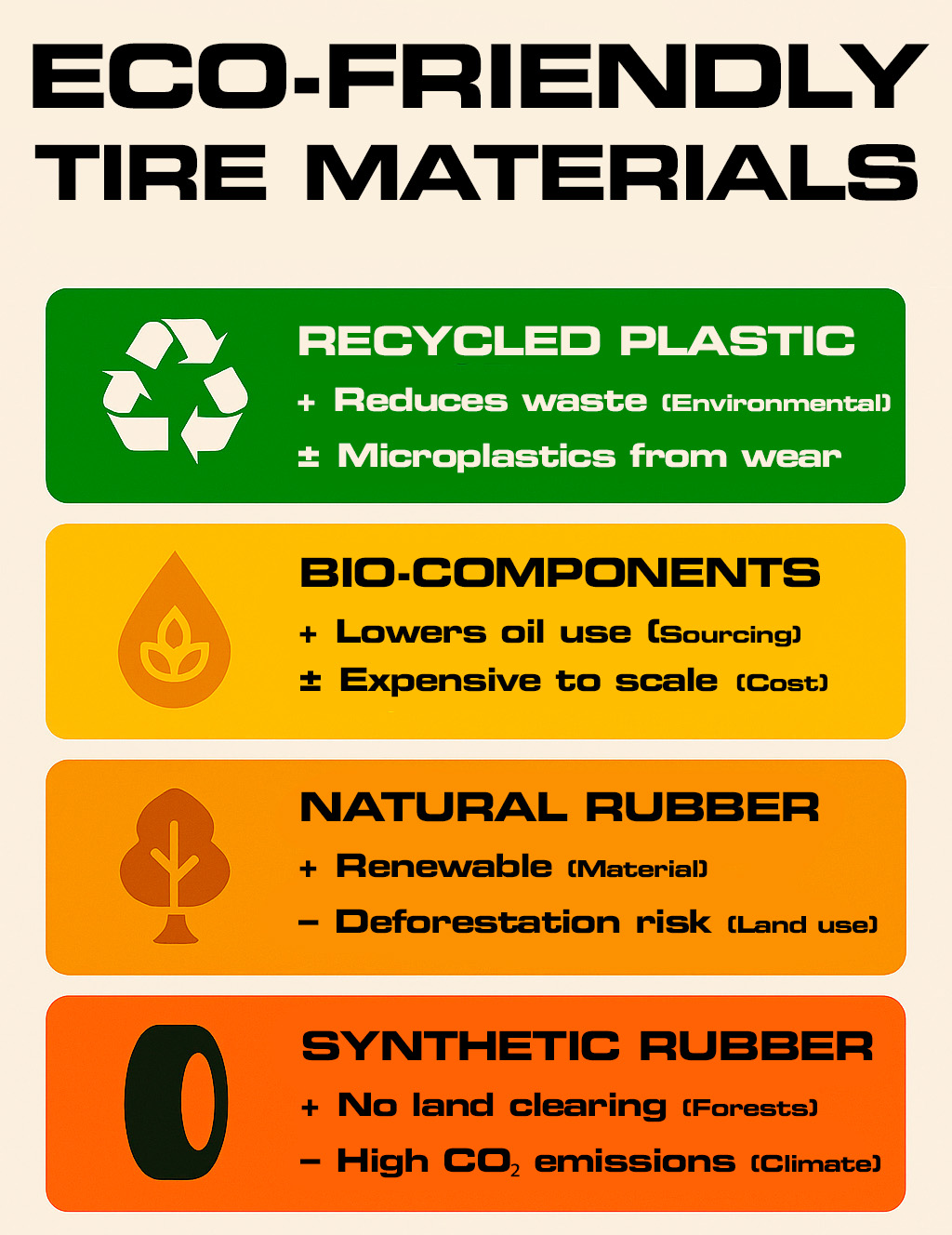
Natural rubber — the backbone of every tire — is also at the heart of an eco-dilemma. Harvested from Hevea tree sap, its demand once drove deforestation in Southeast Asia. Since 2015, Michelin and others have demanded certifications ensuring rubber isn’t grown on newly cleared land. Alternatives? Continental experiments with dandelion latex, though it’s costly. Synthetic rubber, while fossil-fuel-based, saves forests but carries a carbon footprint 2.5x higher. Engineers seek balance: blending natural rubber for durability with synthetic for wet-road grip. Yet wear particles from both types linger in nature for centuries.
Is the premium worth it? Michelin claims its e.Primacy lasts 20% longer, saving up to 30 km of EV range per charge cycle. If the numbers hold, over the tire’s lifespan, you could "earn back" a tank of gas or its electric equivalent. But this hinges on driving habits: aggressive acceleration erases gains.
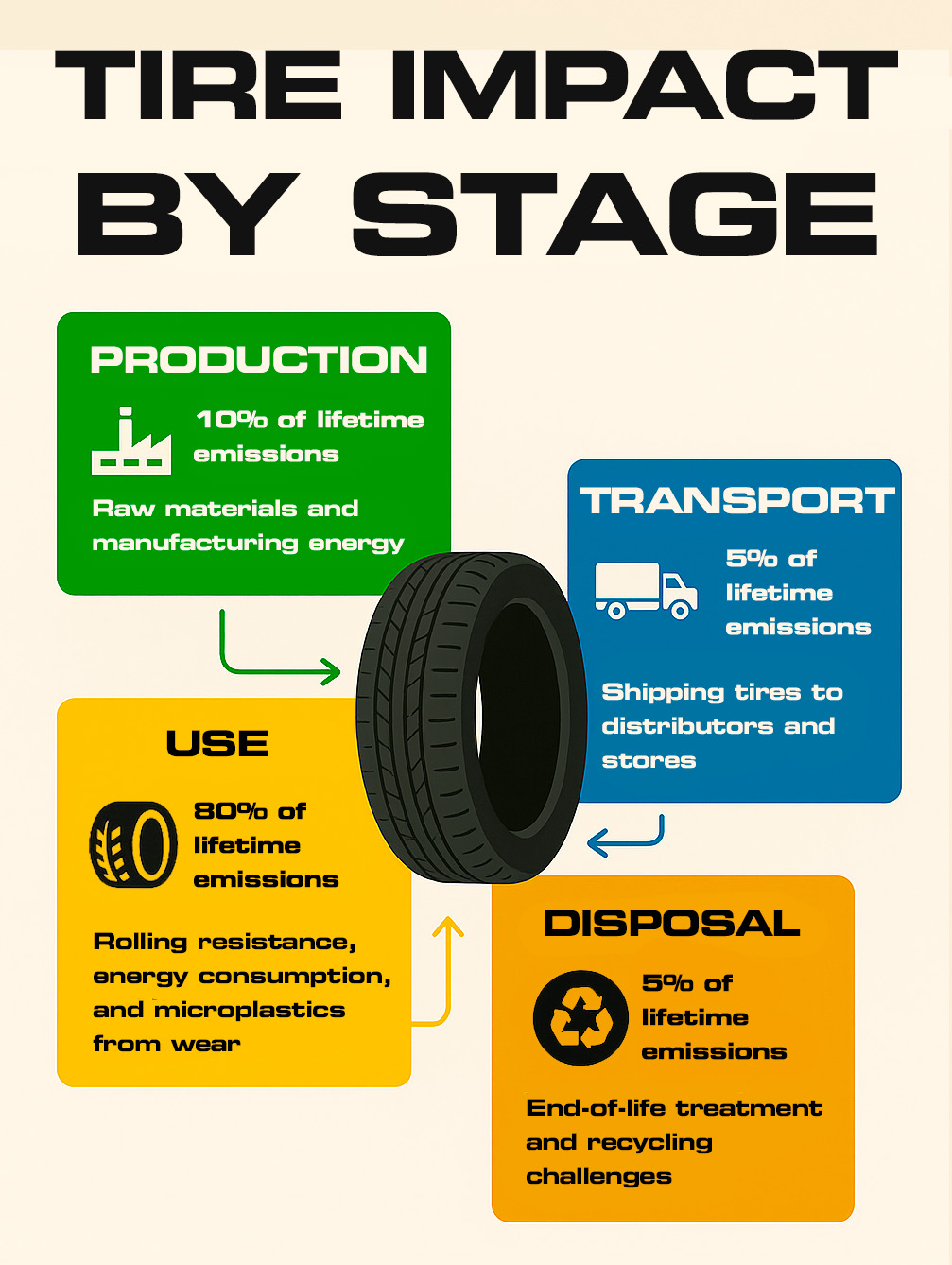
Eco-tires are about trade-offs. Recycled plastic rescues bottles but doesn’t stop microplastic pollution. Bio-oils enhance grip but inflate costs. Natural rubber demands ethical sourcing; synthetic saves forests but harms the climate. And while 80% of a tire’s environmental impact comes from use (not production), even incremental progress matters.
Paying more for "eco" funds both innovation and industry shifts. Yes, marketing buzz abounds, but behind it lie real engineering feats — from ContiRe.Tex to dandelion rubber. If ecology isn’t your drive, pragmatism might be: these tires often last longer and save energy. Just don’t take labels at face value — dig into the facts.
Eco Tire Technologies: Benefits, Costs, and Compromises
A comparison of key materials (see table below) reveals how each component impacts ecology, safety, and budgets. For instance, rapeseed oil boosts winter traction, while recycled plastic cuts carbon emissions but fails to curb tread wear. Sometimes, what looks like progress merely reshapes the problem.
| Material/Technology | Environmental Impact | Safety Impact | Cost (vs Conventional) | Comments & Examples |
|---|---|---|---|---|
| Recycled Plastic (PET) (Polyester from bottles) |
+ Diverts plastic waste, reduces oil dependency. + Lowers energy consumption in production. ± Microplastics from tread wear remain unchanged. |
No impact on durability — recycled cords match traditional strength. | ± Slightly higher due to new processes. + Potential cost savings from material reuse. |
Used in Continental (ContiRe.Tex), Michelin. Up to 15 bottles per tire. |
| Bio-Components (Rapeseed oil, resins) |
+ Renewable alternative to petroleum. + Reduces production carbon footprint. ± Requires land/energy for crop cultivation. |
+ Enhances rubber elasticity, improves grip (especially in cold). No trade-offs in performance. |
± Plant-based oils cost more initially. + Mass adoption reduces price gaps. |
Nokian, Continental, Michelin use plant oils. Industry shifted to bio-oils post-2010s due to toxin bans. |
| Natural Rubber (Hevea latex) |
+ Renewable (trees absorb CO₂). ± Deforestation risks. + Slow biodegradation. |
+ High durability, wear resistance. − Excess can reduce wet traction/cold flexibility. |
± Price fluctuates with harvests. + Certified "eco" rubber is pricier. − Alternatives (e.g., dandelions) remain costly. |
~70% of global rubber goes to tires. Michelin, Continental ensure deforestation-free sourcing. |
| Synthetic Rubber (SBR, butadiene-based, etc.) |
− Non-renewable (oil), energy-intensive production. − High greenhouse gas emissions. No deforestation impact. |
+ Better wet-road grip. + Reduces rolling resistance (energy savings). − Excess weakens durability under stress. |
+ Cheaper at scale. − Tied to oil/energy prices. + Bio-synthetics in development. |
50–60% of polymers in passenger tires are synthetic. Bridgestone, Michelin invest in bio-based alternatives. |
Beyond the above, eco-tires incorporate other innovations:
- Silica from rice husks (replaces sand) to cut production energy.
- Recycled carbon black from worn tires.
- Advanced polymers to reduce wear.
These incremental improvements aim to minimize environmental harm at every lifecycle stage. While each step alone has limited impact, together they pave the way for tires that may one day be 100% eco-safe.
Eco-Friendly Tire Models and Real Benefits: How to Choose Without Overpaying
The eco-friendly tire market has expanded dramatically in the last five years. Almost every major tire manufacturer now offers at least one "green" model designed for electric vehicles (EVs) or sustainability-conscious consumers. Yet, not all "eco" tires are created equal — some truly offer technological and environmental advantages, while others merely wear a "green" badge without significant improvements. Understanding the real benefits behind the marketing slogans is key to making an informed and cost-effective choice.
Overview of Major Eco-Friendly Models and Their Real Advantages
The table below summarizes the most notable eco-tire models from leading brands, their genuine benefits, and the focus areas for each — energy savings, durability, materials, recycling initiatives, or a combination thereof.
| Brand | Model | Key Benefits | Focus Area | Real World Note |
|---|---|---|---|---|
| Michelin | e.Primacy | Low rolling resistance (-7%), extended lifespan (+20%), uses recycled materials (PET) | Energy efficiency, durability, recycled content | Real savings on EV range; premium price offset by durability |
| Michelin | Pilot Sport EV | Designed for EV torque; reinforced for wear resistance; uses sustainable materials | Performance, EV-specific durability | Sports EVs benefit most; expensive for city drivers |
| Continental | EcoContact 6/Q | Energy efficiency (+6%), extended mileage, silica-based tread, ContiRe.Tex recycled PET cords | Energy efficiency, recycled content | Balanced performance; excellent for urban EVs |
| Continental | PremiumContact 7 | Eco design with adaptive tread; lower rolling resistance; focus on bio-sourced materials | Sustainability, safety | Not purely "eco," but more balanced for safety and wet grip |
| Bridgestone | Turanza Eco | Enliten technology: up to 20% lighter tires, reduced raw material use, lower rolling resistance | Material reduction, fuel saving | Good option for hybrids and EVs; premium pricing |
| Pirelli | Cinturato P7 Blue | Focus on rolling resistance and longevity; enhanced wet braking | Fuel saving, safety | Eco benefits moderate; strong on overall safety |
| Pirelli | Elect Series (e.g., P Zero Elect) | Specific EV range extension, low rolling resistance, silent tread technology | EV range optimization | High performance, but very expensive; best for premium EVs |
| Goodyear | EfficientGrip Performance 2 | +50% more mileage, improved wet grip, eco-friendly production targets | Durability, safety | Great value; not heavily marketed as "eco" |
| Hankook | Kinergy Eco2 | Low cost; basic eco-friendly rolling resistance | Budget eco-friendly | Good budget choice for city drivers; not cutting-edge |
| Nokian | Hakkapeliitta R5 EV | SilentDrive technology, low rolling resistance, high use of renewable materials | EV winter performance, sustainability | Premium winter choice for EVs; expensive but efficient |
How to Avoid Marketing Traps and Choose Exactly What You Need
The eco-tire segment is full of beautiful promises: "30% longer life!", "Save energy and the planet!", "Silent as a whisper!" But behind every ad campaign, there are compromises that manufacturers often omit. To avoid overpaying and choosing the wrong product, focus on these points:
1. Check real-world independent tests, not brand claims.
Tests by publications like AutoBild, Tire Reviews, ADAC, or Auto Express reveal real braking distances, rolling resistance, and wear rates.
2. Understand the primary goal of the tire model.
-
Want maximum EV range? Focus on very low rolling resistance models (Michelin e.Primacy, Bridgestone Turanza Eco).
-
Prioritize durability for city driving? Choose long-wear models (Goodyear EfficientGrip Performance 2).
-
Want silent operation for premium EVs? Look for specific EV-labeled tires with noise-absorbing tech (Pirelli Elect series).
3. Match tire choice to your vehicle and driving habits.
High-performance eco tires for a small city EV are a waste of money. Likewise, basic eco tires may not withstand the high torque of sporty EVs.
4. Don’t be blinded by slogans like "Electric Vehicle Ready" without verifying specifications.
True EV-specific tires are designed for:
-
Heavier vehicle weight
-
Higher torque
-
Lower rolling resistance
-
Noise suppression
Simply slapping an "EV" badge on a tire doesn't guarantee performance.
5. Ignore vague "eco-friendly" claims if no certifications or materials data are provided.
Real eco tires list specific technologies, materials (recycled PET, bio-oils), and manufacturing improvements.
Certifications and Standards: What They Really Mean
Understanding certifications is crucial to decoding what "eco-friendly" claims actually cover. Here's a breakdown of the main eco-certifications and labels seen on tires:
| Certification/Standard | What It Certifies | Focus |
|---|---|---|
| ISCC PLUS | Sustainable sourcing of bio-based materials (e.g., natural rubber, bio-butadiene) | Raw material sustainability |
| Global Recycled Standard (GRS) | Verifies recycled content in materials (e.g., PET cords) | Recycled material validation |
| EcoVadis Sustainability Rating | Audits manufacturers for environmental impact, ethics, labor practices | Corporate responsibility and production impact |
| Carbon Trust Certification | Confirms lower carbon footprint throughout the life cycle | Carbon footprint reduction |
| EU Tire Label (since 2021 update) | Measures rolling resistance (fuel economy), wet braking, external noise | Consumer-oriented performance transparency |
| Rainforest Alliance Certified (for rubber) | Guarantees natural rubber comes from forests not associated with illegal deforestation | Forest and biodiversity protection |
| OECD Due Diligence on Responsible Supply Chains | Corporate compliance with ethical, non-exploitative sourcing (for rubber) | Human rights, anti-deforestation |
Why Certifications Matter
While marketing materials often highlight percentages and slogans, certifications are what separate genuine sustainability efforts from greenwashing. Tires made with ISCC-certified materials or GRS-certified PET, for instance, come from traceable, independently verified sources.
Additionally, new EU Tire Labels help consumers choose products based not only on fuel efficiency but also braking performance and noise levels. A tire rated "A" for energy but "C" for braking, for example, might save you range — but at a serious safety cost.
In short: Marketing is subjective. Certifications are objective. Always look for the certification logos, or ask manufacturers for supporting documentation if you don't see them.
FAQs
Most frequently asked questions about eco-friendly tires:
- Q: How much CO₂ can I realistically save by switching to eco tires?
A: Depending on the model and your driving habits, switching to eco-friendly tires could reduce your vehicle's emissions by up to 7% per tire through better energy efficiency. Over approximately 50,000 kilometers, this translates to saving around 150–200 kilograms of CO₂ — comparable to avoiding a few short-haul flights. - Q: Is it worth using eco tires on non-electric cars?
A: Absolutely. Eco tires offer benefits beyond electric vehicles. Their low rolling resistance can improve fuel economy and extend tire lifespan on gasoline and hybrid cars as well, making them a smart choice for anyone looking to reduce costs and environmental impact over time. - Q: Do eco certifications guarantee tire performance, not just environmental benefits?
A: No. Certifications like ISCC PLUS or GRS confirm that a tire’s materials are sustainably sourced or recycled but say nothing about performance metrics like wet grip, braking distance, or noise. Always consult independent test results to assess safety and driving performance separately from environmental claims. - Q: Could fully biodegradable tires ever become mainstream?
A: Technologically, fully biodegradable tires are possible, but mass adoption faces major hurdles. Tires must withstand extreme stresses, temperature changes, and chemical exposure — challenges that current biodegradable materials cannot fully meet. However, ongoing research could lead to breakthroughs within the next decade. - Q: What's the future beyond "eco" — are fully circular tires realistic?
A: Yes, creating fully circular tires — made from 100% renewable or recycled materials and fully recyclable at end-of-life — is a major goal for the tire industry. While several brands are investing heavily, fully circular commercial tire models are likely still 5–10 years away from becoming mainstream.
Conclusion: Choosing Eco-Friendly Tires Wisely
Eco-friendly tires are no longer a gimmick — many models today deliver real gains in energy efficiency, range, safety, and material sustainability. However, not every "eco" label hides the same level of innovation or responsibility.
To make a real difference — both for your wallet and for the planet — it's crucial to look beyond marketing slogans. Independent test results, certifications, and a clear understanding of your driving needs should guide your choice.
By making informed decisions, you’ll not only enhance your vehicle's performance and longevity but also support brands truly committed to sustainability — without falling for pure marketing hype.
Seasonal Tire Recommendations for Electric Vehicles
EV tire guide: Winter vs summer vs all-season tires compared. Avoid 15% range loss, ensure safety, and optimize performance. Expert advice.
How are Electric Vehicle Tires Different from Regular Tires?
Lose 15% EV range with regular tires? EV-specific tires boost efficiency, reduce noise, handle torque. Essential guide for EV owners.
Original Equipment Tires for Electric Cars
EV tires matter: OE models like Michelin Pilot Sport 4S boost range, cut noise, and handle torque. Avoid 25km range loss and safety risks—see why.
How to Choose Tires for Noise Level and Comfort in EVs
EV tires: Acoustic foam, tread design & ISO tests reduce noise. Choose quiet, comfortable options for your electric vehicle. Expert insights inside.
Tire Maintenance and Longevity for Electric Vehicles
EV tire care: Avoid 30% faster wear with proper pressure checks, rotation, and winter tires. Maximize range and safety now.