
How to Choose Tires for Noise Level and Comfort in EVs
Introduction
Encountering the need for new tires on your electric vehicle (EV) can occur for various reasons: reducing cabin noise, enhancing driving comfort, or simply replacing worn-out tires. Given the unique characteristics of EVs, such as quieter operation and increased sensitivity to road vibrations, choosing the right set of tires becomes even more important.
Imagine needing new tires and heading to a tire shop, where you might easily get overwhelmed by multiple options. While some drivers prefer directly testing tires in-store, this isn’t always practical or possible. Whether you're limited by time, prefer online shopping, or simply want a clear understanding of tire features specifically suited to your EV, this guide is designed for you.
This article provides insights into tire noise measurement, explains relevant technologies that enhance comfort and quietness, and helps you make an informed decision to ensure an enjoyable driving experience in your electric vehicle.
Measuring Tire Noise
For starters, let's clearly define what tire noise is, explain the European labeling system, and detail how noise levels are measured and evaluated.
Tire noise is particularly noticeable in electric vehicles (EVs) due to the lack of engine noise masking it. What drivers primarily hear inside the vehicle cabin originates from three main sources: air displacement within tread grooves, vibrations transmitted through the suspension system, and resonance occurring inside the tire cavity itself.
In Europe, tire noise levels are standardized under EU Regulation (EC) No 1222/2009. This regulation requires noise measurements to be conducted using the ISO 13325 test standard, which involves passing vehicles at a speed of 80 km/h past microphones placed at a distance of 7.5 meters from the centerline of the vehicle's trajectory. The noise produced is measured in decibels (dB), and the results are displayed using a three-wave symbol system on tire labels:
-
One wave: low noise (≤68 dB)
-
Two waves: moderate noise (69–71 dB)
-
Three waves: high noise (≥72 dB)
Noise levels can significantly affect driver comfort and perception of ride quality. To better understand the practical impact of these decibel ratings, consider the expanded infographic below, enriched with typical experiences based on comprehensive vehicle acoustic studies:
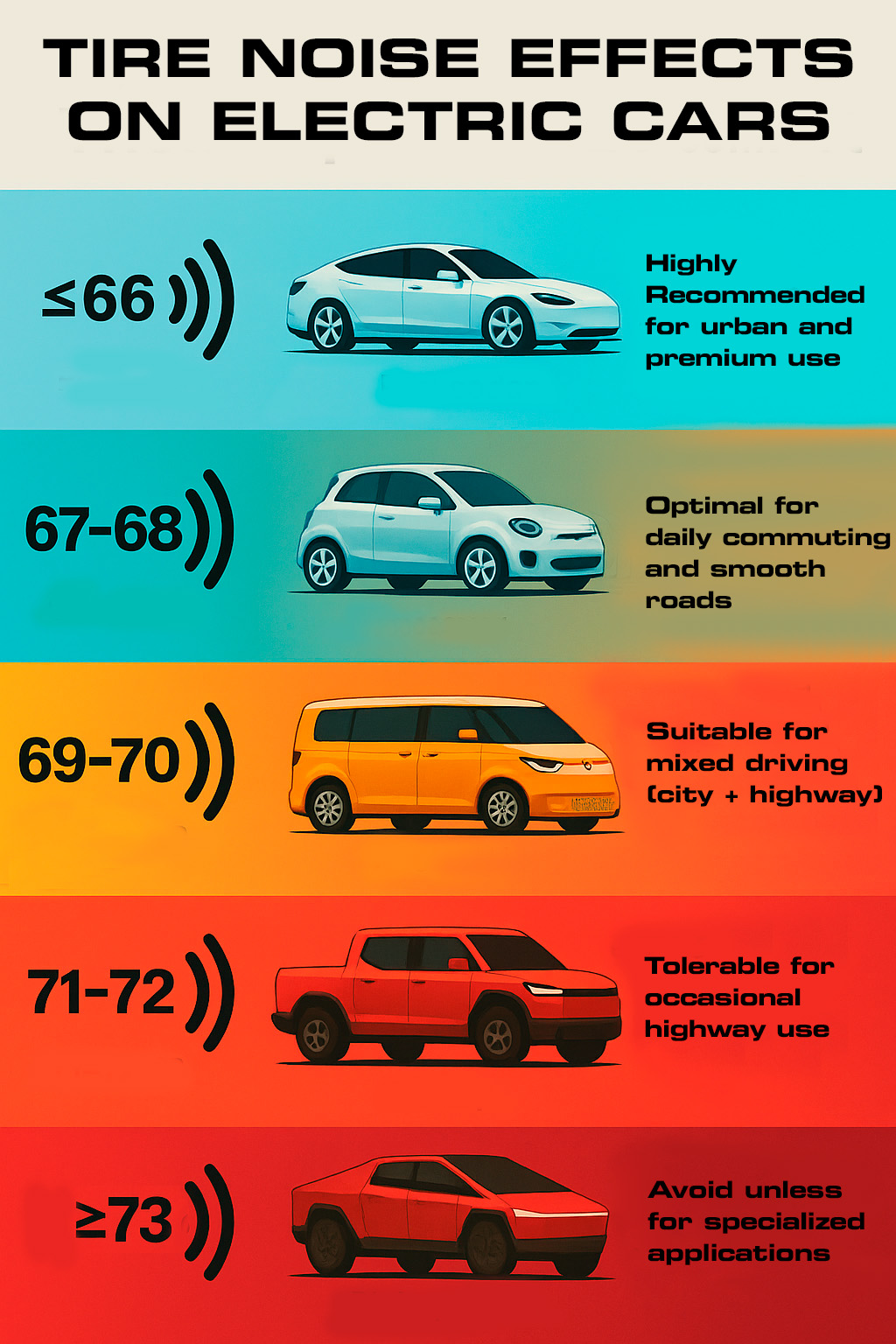
Research conducted by organizations such as TÜV SÜD and ADAC consistently supports these assessments, highlighting how incremental noise reductions enhance driving comfort, especially in EVs. Tests generally follow international standards such as ISO 362 for external vehicle noise and ISO 5128 for tire-specific rolling noise. These standards ensure consistency and reliability in noise level measurements, making it easier for consumers to choose tires that improve their driving comfort and reduce unwanted cabin noise.
Technologies for Noise Reduction
Now, let's explore technologies used in EV tires. To simplify your decision-making, these technologies have been grouped by their primary function and characteristics.
Tire noise reduction in electric vehicles is crucial because EV cabins lack engine sound, making tire-related noise more apparent. Tire makers address this with distinct methods grouped into three main categories:
Acoustic Foam Inserts
Acoustic foam is a widely adopted solution for reducing tire noise in EVs. Here’s why it’s so common:
The technology involves placing a lightweight foam layer inside the tire to absorb vibrations and resonance caused by air movement in the tire cavity. This directly targets the low-frequency “booming” sound that’s especially noticeable in silent EVs, lowering cabin noise by 3–5 dB—equivalent to muffling a vacuum cleaner to a quiet conversation.
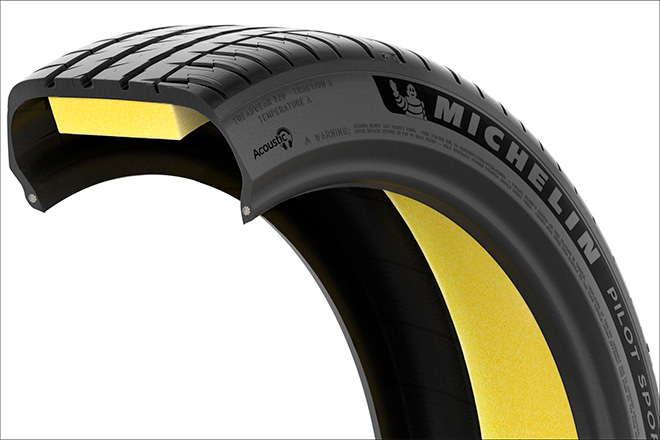
Major tire brands like Pirelli (PNCS), Michelin (Acoustic Technology), and Continental (ContiSilent) use variations of this method. For instance, Pirelli’s PNCS foam in the Audi e-tron GT reduced highway-speed cabin noise by 20%, proving its effectiveness.
Tread Design Optimization
Right after acoustic foam, tread pattern tweaks are the second most popular way to cut EV tire noise. Instead of adding materials, engineers reshape the tread itself: varying block sizes, angles, and spacing to break up sound waves. This disrupts the repetitive "hum" that occurs when all tread blocks hit the road identically.
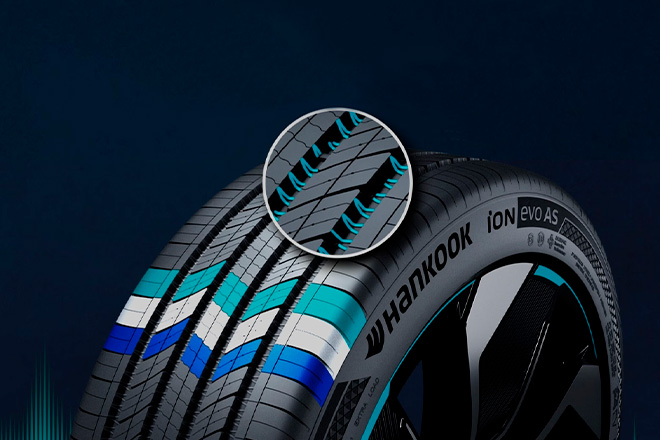
While slightly less impactful than foam (reducing noise by 2–4 dB), optimized treads excel at minimizing high-speed highway drone. For example, Michelin’s variable pitch sequencing scatters sound frequencies, while Goodyear’s asymmetric designs redirect air flow to prevent whistling. Combined with foam, these patterns deliver the quietest rides—but even alone, they make rough asphalt feel smoother.
Specialized Rubber Compounds
These advanced compounds minimize vibration transmission from the road to the chassis, directly reducing cabin noise. While formulations vary by brand, all share the same goal: quieter rides.
Even without foam inserts or complex tread patterns, specialized rubber can dampen noise through:
-
Material softness: Absorbs high-frequency vibrations (e.g., from rough asphalt).
-
Additives (silica, polymers): Reduce friction and hysteresis losses, preventing energy from converting into noise.
Though critical, these compounds often go unnoticed without analyzing patents or material specs. Most manufacturers combine them with foam or optimized treads, marketing the result as a "holistic solution" rather than highlighting the rubber alone.
Example: Michelin’s Energy™ Passive Compound uses silica and sunflower oil to cut noise by 4 dB, proving that chemistry matters as much as design.
Validating Effectiveness Through Testing
The performance of noise-reduction technologies in EV tires is rigorously validated under ISO 13325 (tire noise measurement) and ISO 362 (vehicle noise testing). These standards ensure that innovations like acoustic foam, tread optimization, and specialized rubber compounds deliver measurable improvements in cabin comfort. Below is an expanded analysis of 15 leading tire models, categorized by their primary noise-reduction strategies:
| Brand | Tire Model | Acoustic Foam | Tread Optimization | Special Compound | Noise Level (dB) | Typical EVs |
|---|---|---|---|---|---|---|
| Michelin | Pilot Sport EV | Yes | Advanced | Standard | 68 | Tesla Model S, BMW i4 |
| Bridgestone | Turanza EV | Yes | Moderate | Enhanced | 68 | Audi Q4 e-tron |
| Pirelli | P Zero Elect | Yes | Optimized | Specialized | 69 | Porsche Taycan, Lucid Air |
| Goodyear | ElectricDrive GT | Yes | Moderate | Reinforced | 69 | Ford Mustang Mach-E |
| Hankook | iON evo | Optional | Yes | Moderate | 70 | Hyundai Ioniq 5, Kia EV6 |
| Continental | EcoContact 6 EV | Optional | Advanced | Noise-Dampening | 70 | Nissan Ariya, VW ID.4 |
| Yokohama | BluEarth-EV | No | Optimized | Nano Compound | 69 | Toyota bZ4X, Lexus RZ |
| Nokian | Hakkapeliitta R5 EV | No | Adaptive | Cold-Weather | 71 | Volvo XC40 Recharge |
| Falken | e.Ziex | No | Asymmetric | Silica-Based | 70 | Tesla Model Y, BYD Han |
| Vredestein | Quatrac Pro EV | No | Waveform | Porous | 69 | Polestar 2, Mercedes EQS |
| Cooper | Evolution Tour EV | Yes | Moderate | Silica-Rich | 68 | Chevrolet Bolt, Renault Zoe |
| Toyo | Proxes EV1 | Yes | Variable Pitch | Noise-Absorbing Layer | 70 | Rivian R1T, Ford F-150 Lightning |
| Dunlop | Enasave EC300+ EV | Optional | Advanced | Silica-Based | 69 | Mini Cooper SE, Mazda MX-30 |
| BFGoodrich | e-Trail | No | All-Terrain | Wear-Resistant | 72 | Rivian R1S, GMC Hummer EV |
Comfort and Ride Quality
Now let's examine technologies specifically aimed at enhancing comfort and ride quality in EV tires. For ease of selection, these comfort technologies are grouped by their primary roles in improving driving experience. Ride comfort in electric vehicles primarily depends on the tire's ability to absorb shocks, reduce vibrations, and maintain smoothness over various road surfaces. Tire manufacturers employ several key methods, which can be categorized as follows.
This grouping is based on a simple yet effective principle: Comfort = Absorption (sidewall) + Filtering (rubber) + Distribution (carcass). While factors like acoustic insulation, wear resistance, or tire pressure also contribute to the overall feel, they are secondary to these three core pillars that directly govern ride comfort.
- Flexible Sidewalls: Flexible sidewalls help tires smoothly absorb impacts from uneven roads, improving overall suspension performance and passenger comfort. They are particularly effective in urban and suburban driving conditions where frequent bumps and road imperfections occur.
- Soft Rubber Compounds: Tires made with softer rubber compounds effectively reduce high-frequency vibrations generated by coarse road textures, enhancing comfort, especially noticeable on highways and rough surfaces.
- Optimized Carcass Design: The carcass structure distributes forces evenly throughout the tire, which reduces jolts and vibrations transmitted to the cabin. This structural feature significantly improves ride smoothness, particularly at lower speeds or on roads with inconsistent surfaces.
Validating Comfort Through Testing
These comfort features have been rigorously tested in alignment with industry standards such as ISO 23671 for tire rolling comfort and ISO 10844 for road surface interactions.
Comfort performance in EV tires is increasingly subject to these standards, ensuring that design innovations—like flexible sidewalls, soft compounds, and optimized carcass structures—translate into measurable improvements in ride quality and passenger experience.
Below is an expanded comparison table covering various tire models and detailed comfort features:
| Brand | Tire Model | Flexible Sidewalls | Soft Compound | Optimized Carcass | Recommended EV Models |
|---|---|---|---|---|---|
| Michelin | e.Primacy | Yes | Yes | Advanced | Renault Zoe, BMW i3 |
| Bridgestone | Turanza QuietTrack | Yes | Moderate | Standard | Nissan Leaf, VW ID.4 |
| Continental | PremiumContact 7 | Yes | Yes | Advanced | Tesla Model 3, Mercedes EQE |
| Goodyear | EfficientGrip Performance 2 | Moderate | Yes | Enhanced | Hyundai Kona Electric |
| Pirelli | Cinturato P7 (EV) | Yes | Yes | Optimized | Audi Q8 e-tron, Volvo XC40 Recharge |
| Hankook | Kinergy AS EV | Moderate | Yes | Moderate | Chevrolet Bolt EUV |
| Yokohama | BluEarth-GT AE51 | Yes | Moderate | Standard | Mazda MX-30, Toyota bZ4X |
| Falken | e.Ziex ZE310 EV | No | Yes | Asymmetric | Kia EV6, Tesla Model Y |
| Cooper | Evolution Tour | Moderate | Silica-Rich | Standard | Nissan Ariya, Chevrolet Bolt |
| Toyo | Proxes Comfort EV | Yes | Yes | Enhanced | Ford F-150 Lightning |
| Kumho | Ecsta PS91 EV | Moderate | Yes | Optimized | Hyundai Ioniq 5, Kia EV9 |
FAQs
Most frequently asked questions about noise and comfort for EVs:
- Q: Why doesn’t the quietest tire on the label always feel the quietest in the car?
A: Because label tests measure external noise in ideal conditions. Cabin quietness depends on how the tire interacts with your EV’s suspension, road surface, and insulation. - Q: Do ISO noise tests reflect what you actually hear inside an EV?
A: Not fully. ISO 13325 and EU labels measure pass-by noise outside the car. Real cabin quietness depends more on internal resonance, tread feel, and suspension interaction. - Q: Why do tires with the same noise rating feel more or less comfortable in different EVs?
A: Because EU noise labels measure sound, not vibration. Comfort depends on how sidewalls, compounds, and carcass handle road texture—something labels don’t show. - Q: How much difference do 2–3 dB actually make?
A: A lot. A 3 dB drop feels like cutting noise in half to the human ear. - Q: Are there quiet tires that aren’t good for EVs?
A: Yes. Soft sidewalls without reinforcement, cheap models without testing, and sporty DVS tires are bad choices for EVs—even if labeled “quiet.
Conclusion
Now that you're equipped with detailed knowledge about tire noise and comfort technologies for electric vehicles, choosing the right tires should feel straightforward and manageable. Understanding the technologies behind noise reduction and ride comfort empowers you to select tires that align perfectly with your preferences and driving conditions. Keep in mind the balance between these characteristics based on your typical driving environment.
Eco-Friendly and Sustainable Tires for Electric Vehicles
Eco tires: Avoid greenwashing. Learn key certifications, CO2 savings, and top sustainable picks for informed, eco-conscious choices.
How are Electric Vehicle Tires Different from Regular Tires?
Lose 15% EV range with regular tires? EV-specific tires boost efficiency, reduce noise, handle torque. Essential guide for EV owners.
Original Equipment Tires for Electric Cars
EV tires matter: OE models like Michelin Pilot Sport 4S boost range, cut noise, and handle torque. Avoid 25km range loss and safety risks—see why.
Tire Maintenance and Longevity for Electric Vehicles
EV tire care: Avoid 30% faster wear with proper pressure checks, rotation, and winter tires. Maximize range and safety now.