
Seasonal Tire Recommendations for Electric Vehicles
Introduction
Choosing tires for an electric vehicle isn’t the same as for a regular car. You’ve probably noticed your EV behaves differently—it's heavier, quieter, and responds instantly when you press the pedal. Because of these differences, picking the right tires directly impacts your comfort, safety, and driving range.
Maybe you’ve heard that special "EV" tires exist but aren’t sure if they're worth it. Or perhaps you’re wondering if you really need to switch tires every season. This guide clears up these questions, explains how tire choice affects real-world EV performance, and helps you find what actually matters for your situation—whether that’s maximizing range, keeping the cabin quiet, or simply driving with confidence year-round.
Winter Tires for Electric Vehicles: What Drivers Know (and What They Don’t)
Electric vehicles and winter — a combination that still sparks debate. Some drivers swear EVs handle snow as well as diesel SUVs; others fear even pulling out of the garage. The truth, as always, lies somewhere in between.
Take Norway. Here, where winters are dark and frigid, EVs have long ceased to be exotic. The secret isn’t just subsidies but habits: Norwegians preheat their batteries via apps, and charging stations with heated cables operate even at -20°C. This isn’t fantasy — it’s infrastructure that keeps the cold from killing range. In regions with less-developed charging networks, the situation differs. Yet even there, surveys show 60% of EV owners stick with their cars in winter. They simply plan trips more carefully: 250 km instead of the advertised 400 km — still more than the average city dweller’s daily commute.
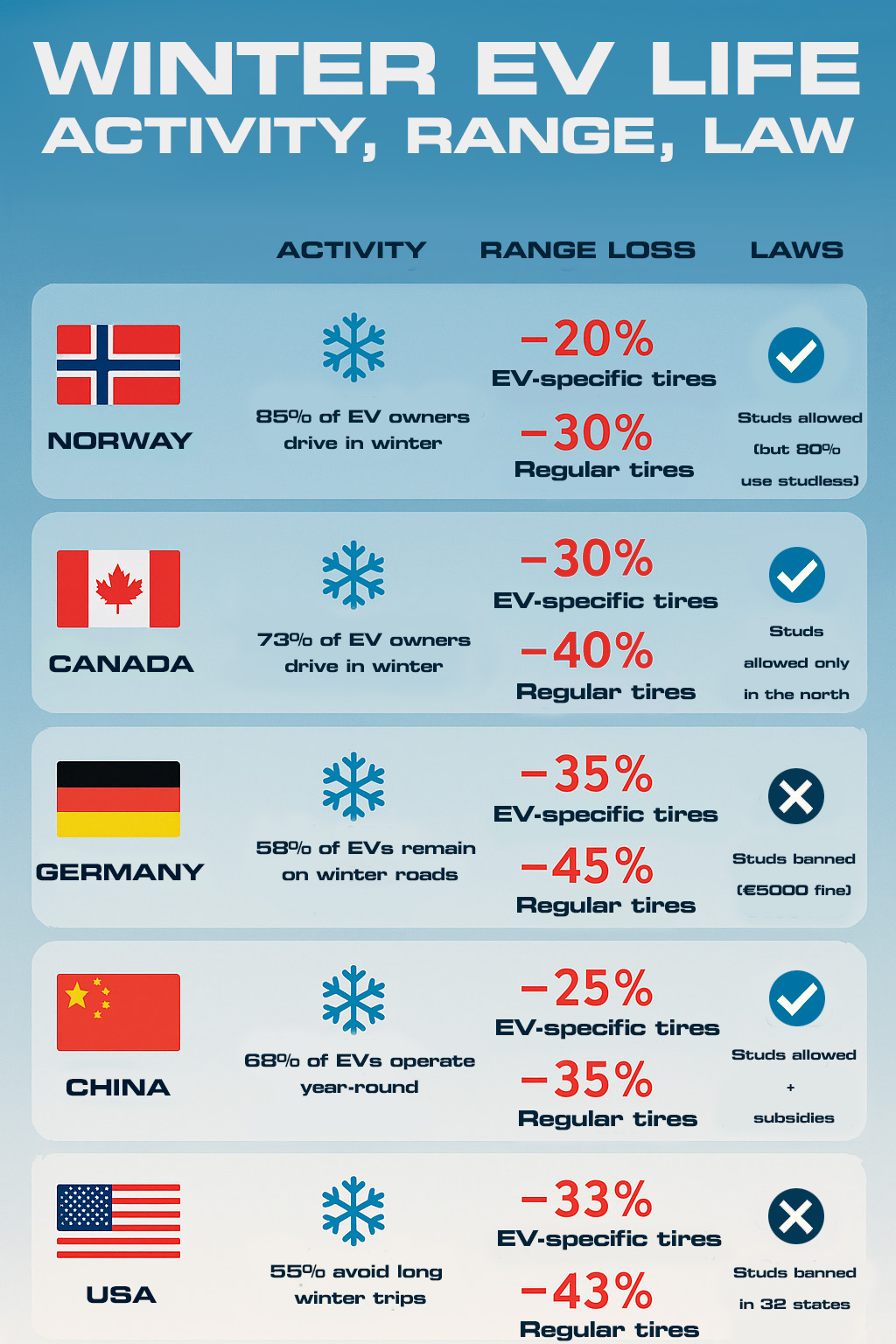
When it comes to tires, many forget that an EV isn’t just a "car without a tailpipe." Take the Tesla Model Y: weighing in at 2.5 tons, it’s half a ton heavier than a comparable gas-powered SUV. That mass can’t be managed on regular winter tires, even premium ones. Rubber deforms under the load, losing contact with the road, while instant torque turns acceleration into wheel spin. This is why companies like Nokian and Michelin develop tires specifically for EVs — with reinforced casings and rubber that stays pliable in deep freeze. For example, the Hakkapeliitta R5 EV remains flexible at -35°C, while the Pilot Alpin 5 EV cuts energy use by 7% through low rolling resistance. But this doesn’t mean everyone needs them. For compact EVs like the Nissan Leaf, which weighs as much as a conventional car, standard winter tires like the Continental WinterContact work — provided the load index is at least 94.
Studs are a separate story. In Siberia, they’re seen as lifesavers; in Europe, as barbaric. Both sides have a point. Studded tires like the Hakkapeliitta 10 slash braking distances on ice by a third, but the cost is high: bans across much of the EU, damaged asphalt, and noise. The alternative? Studless tires with smart tread designs. The Michelin X-Ice Snow, for instance, uses hydrophilic grooves to absorb moisture, creating friction on ice. The braking difference? Just 2 meters at 30 km/h — more than enough for city driving.
Ultimately, the choice isn’t about technology but lifestyle. If you live where snow lingers until spring, studs make sense. In cities with plowed roads (even imperfectly), studless tires are quieter and legal. And myths about EVs being "useless in winter" crumble against facts: Norwegians, Canadians, and drivers in harsh climates worldwide already rely on them year-round. They just prepare — as they would for any winter.
Top Winter Tires for EVs: A Comparison
To find the right fit, focus on key technologies and specs. Below, we compare models that balance safety, efficiency, and EV-specific adaptability.
| Brand & Model | EV-Specific Features | Ideal For | Certifications | Key Highlights |
|---|---|---|---|---|
| Nokian Hakkapeliitta R5 EV | SilentDrive™ technology, Green Trace compound, Aramid Sidewalls | Heavy EVs, extreme cold | 3PMSF | Low rolling resistance, enhanced winter grip, eco-friendly materials |
| Michelin X-Ice Snow | Flex-Ice™ 2.0 compound, EV-optimized design | Range-focused drivers | 3PMSF | Long-lasting snow and ice performance, low rolling resistance |
| Continental WinterContact TS 860 S | EV-compatible symbol, CoolChili™ compound | Luxury EVs (e.g., BMW i5, Mercedes EQS) | 3PMSF | Superior dry handling, strong braking on snow |
| Pirelli Winter Sottozero 3 ELECT™ | ELECT™ marking, low rolling resistance compound | High-performance EVs | 3PMSF | Enhanced grip in winter conditions, optimized for electric vehicles |
| Hankook iON i*cept IW01 | EV-specific tread compound, sound-absorbing foam | Torque-heavy EVs, urban driving | 3PMSF | Improved snow traction, reduced road noise |
| Bridgestone Blizzak WS90 | Multicell™ compound, optimized tread pattern | Light EVs, budget-conscious drivers | 3PMSF | Enhanced grip on icy roads, extended wear life |
| Goodyear UltraGrip Ice 2 | ArcticGrip™ technology, interlocking sipes | Mixed snow/ice conditions | 3PMSF | Reliable traction in winter conditions, stable handling |
| Vredestein Wintrac Pro | High-silica compound, reinforced construction | Performance EVs | 3PMSF | Short braking distances on snow and ice, balanced handling |
| Yokohama BluEarth Winter V905 | Orange Oil + Silica blend, adaptive tread design | Eco-conscious drivers | 3PMSF | Maintains flexibility at low temperatures, low noise levels |
EV Winter Tires: Cutting Through the Hype
Specialized winter tires are essential for heavy EVs (2+ tons) and long-range driving — their reinforced carcasses and low rolling resistance help preserve range and safety. For lighter EVs or short commutes, standard winter tires are fine — as long as they have a load index ≥94 and the 3PMSF snow traction symbol.⚠️ Don’t be swayed by buzzwords like “EV-optimized.” Instead, focus on technical specs (load, rolling resistance) and independent validation (e.g., TÜV SÜD, ISO standards). Some top-performing tires aren't labeled for EVs — but still work perfectly when matched correctly.
Summer Tires for EVs: Hidden Nuances You Need to Know
Summer for an electric vehicle isn’t just about heat and long drives — it’s a stress test for tires. Imagine a 2.5-ton car accelerating to 100 km/h in 3 seconds. Every launch creates forces akin to emergency braking. Standard tires wear down rapidly, their shoulder zones cracking from overheating. But weight and torque aren’t the only challenges. In scorching heat, asphalt hits 60°C, softening rubber and reducing grip. Add the need to preserve range, and it’s clear why EV summer tires demand specialized engineering.
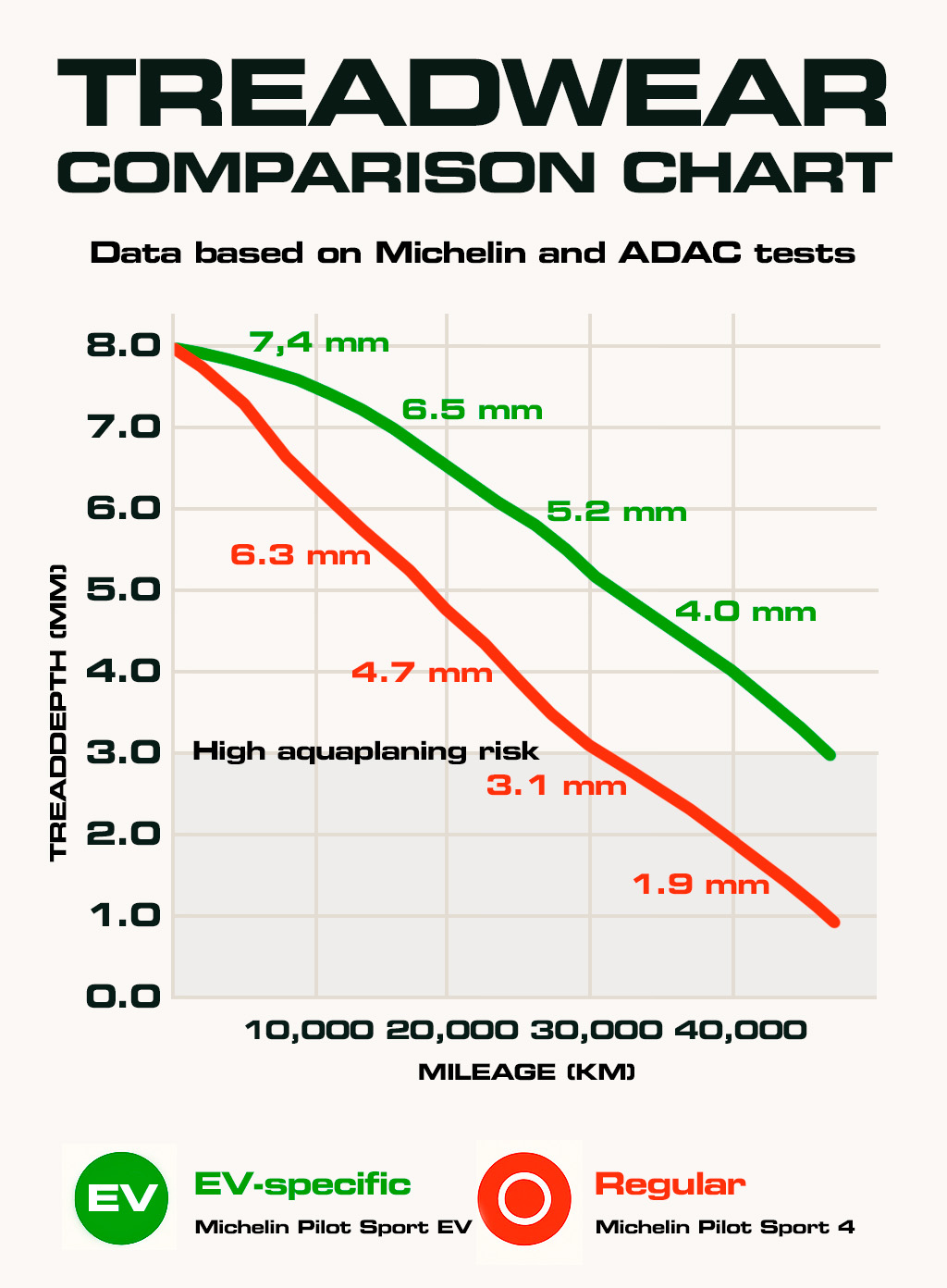
On wet roads, EVs behave differently. Their weight improves traction, but only if tires channel water efficiently. Hydrophobic compounds infused with silane create a water-repellent “lotus effect,” while micro-sipes bite into wet asphalt like microscopic spikes. Technologies deemed excessive for ICE cars become essential here. But there’s a trade-off: low-profile tires with stiff casings boost handling but amplify cabin noise — a glaring flaw in EVs’ silent cabins.
Another stealthy enemy? Pressure. A 0.2-bar deviation cuts range by 3–5% and accelerates wear. Summer heat inflates tire pressure, misleading drivers. For example, cold morning pressure of 2.5 bar can jump to 2.8 bar by noon. Result? The tread center wears faster than the edges, and grip deteriorates.
But there’s more. EV tires must balance conflicting demands:
-
Be rigid enough to handle battery weight, yet flexible for grip.
-
Minimize rolling resistance without sacrificing cornering stability.
-
Dampen noise that becomes intrusive in quiet EVs.
How to avoid mistakes?
Focus on three key parameters:
-
Load index — at least 10% higher than for comparable ICE vehicles.
-
Rolling resistance — look for LRR (Low Rolling Resistance) labels.
-
Acoustic comfort — noise-canceling tech like polyurethane foam inserts.
Now, let’s dive into the technologies solving these challenges. The table below showcases innovations transforming EV summer tires from consumables into strategic assets — from reinforced casings to AI-optimized treads.
| Technology | What It Does | Why It Matters for EVs | Examples |
|---|---|---|---|
| Reinforced Carcass (Extra Load/HL) | Strengthens sidewalls and increases load capacity. | EVs are 200–600 kg heavier than ICE vehicles. | Continental HL, Michelin EV-specific models. |
| Low Rolling Resistance (LRR) | Reduces energy loss during rolling. | Directly impacts driving range. | Michelin Energy Saver, Hankook iON, Goodyear ElectricDrive. |
| Noise-Canceling Foam | Polyurethane foam inside the tire absorbs vibrations. | EVs lack engine noise, making tire hum the primary sound source. | Pirelli PNCS, Michelin Acoustic, Hankook Sound Absorber. |
| High-Silica Compound | Enhances grip in heat and wet conditions. | EVs exert greater stress on tires during acceleration and regenerative braking. | Pirelli Elect, Bridgestone ENLITEN. |
| Heat-Resistant Polymers | Maintains tread integrity at temperatures >60°C. | EVs generate more heat due to weight and torque. | Michelin Pilot Sport EV, Hankook iON evo. |
| Asymmetric Tread with Micro-Sipes | Ensures directional grip and efficient water evacuation. | EV weight improves traction but requires optimized water displacement. | Continental EcoContact 6, Goodyear EfficientGrip Performance. |
| AI-Optimized Tread Pattern | Balances grip, wear, and noise via AI-driven design. | EV battery weight creates uneven load distribution. | Kumho Majesty 9 EV, Nokian iLine EV. |
| Sustainable Materials | Uses natural rubber, recycled oils, and eco-friendly components. | EV brands prioritize sustainability, pushing tire manufacturers to adapt. | Hankook iON GT, Michelin e.Primacy. |
| Anti-Deformation Sidewalls | Reduces body roll and improves steering precision. | EVs’ low center of gravity demands sharper handling. | Vredestein Ultrac Pro EV, Bridgestone Potenza EV. |
| EV-Specific Labeling (Elect, EV, HL) | Simplifies identification of EV-compatible tires. | Avoids confusion with ICE-focused models that lack EV-specific engineering. | Pirelli P Zero Elect, Hankook iON, Goodyear ElectricDrive. |
All-Season Tires: Compromise or Solution?
All-season tires promise convenience for drivers, but when used on electric vehicles (EVs), specific technical compromises become critical. Primarily, their tread patterns, designed for versatile weather conditions, can significantly increase rolling resistance. At speeds around 110 km/h (68 mph), this resistance can reduce an EV's range by up to 15%, potentially resulting in about 80 km (50 miles) lost range for a vehicle with a 75 kWh battery.
A more critical issue is heat management. All-season tires use rubber compounds engineered to remain flexible at low temperatures, typically around -10°C. However, under the substantial weight of EV batteries, these tires can overheat rapidly, reaching temperatures of approximately 82°C (180°F), compared to summer tires that stabilize at around 68°C (154°F) under similar conditions. This excessive heat leads to premature wear; after approximately 20,000 km (12,400 miles), all-season tires can lose up to 40% of their elasticity, significantly accelerating tread degradation, particularly during highway driving.
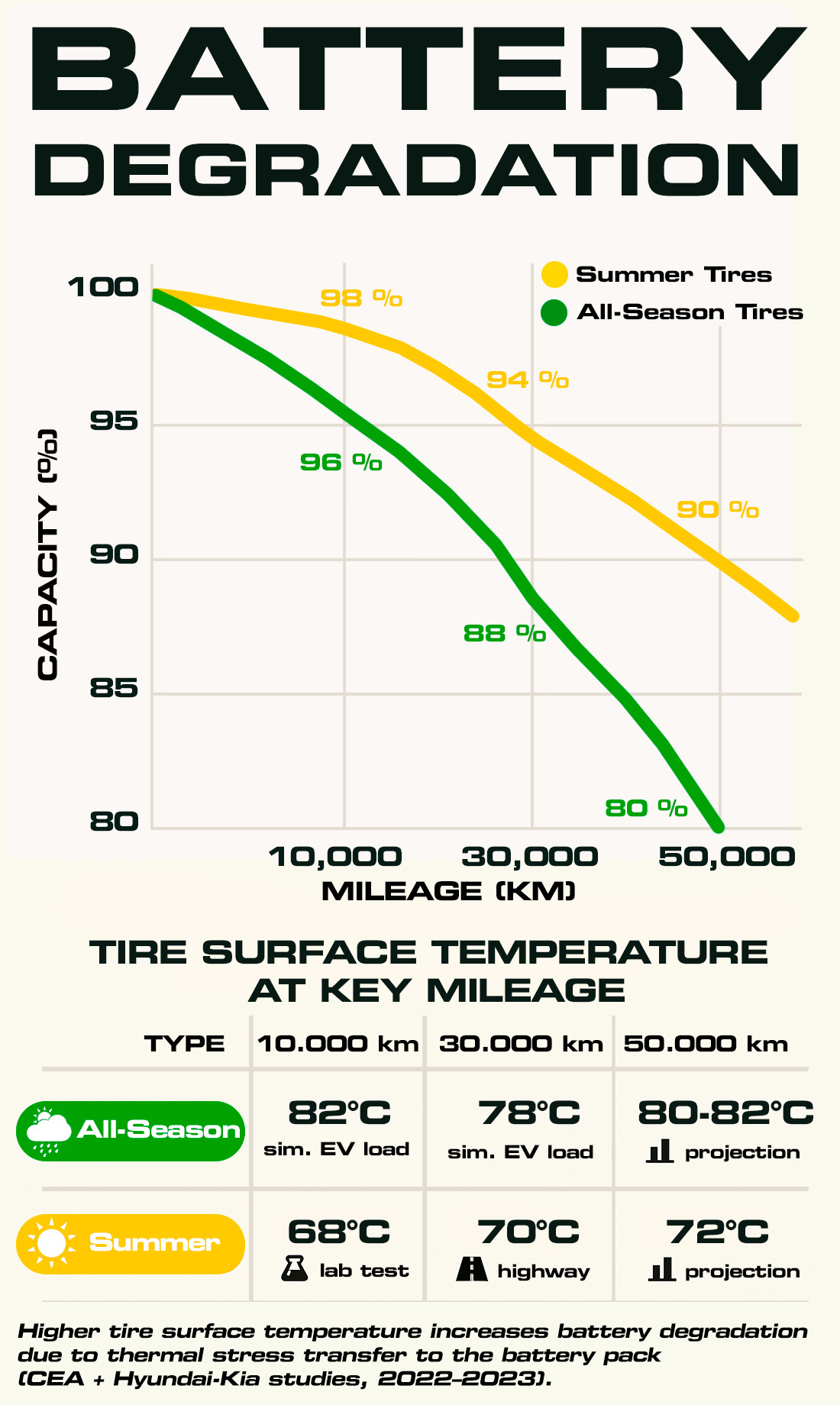
Financially, while purchasing one set of tires instead of two initially appears economical, it may lead to unexpected costs due to increased battery degradation. Tire temperatures exceeding 90°C (194°F) can cause battery cells to heat beyond recommended limits, accelerating battery capacity loss at a rate of about 4% per 10,000 km (6,200 miles).
Winter performance adds another layer of complexity. An EV's battery charge level directly affects vehicle weight, and at low battery levels (around 10-15%), the vehicle may become lighter by 150-200 kg (330-440 lbs), increasing tire pressure by about 0.3 bar. This increase can stiffen the tire tread, reducing traction significantly. Real-world testing, such as with the Volkswagen ID.4, indicated that stopping distances on snow increased from 12.5 meters (41 ft) with a full battery to 17 meters (56 ft) at low battery levels.
Moreover, certain tire designs can interfere with advanced driver assistance systems (ADAS). Infrared reflections from tire sipes have been documented to confuse autopilot cameras, resulting in erroneous lane recognition and unsafe lane changes. Steel-belted tire construction can similarly affect ultrasonic sensors, causing false obstacle detection.
What’s next?Behind each challenge are innovations: nanocomposite materials, laser-etched treads, or smart cooling systems. To grasp their impact, we must dissect them — not as features, but as tools that transform compromise into informed choice. This isn’t a checklist; it’s the blueprint for EVs to conquer physics, one tire at a time.
| Parameter | Challenge | Technology Solution | Example Models | Performance Gain |
|---|---|---|---|---|
| Rolling Resistance | EVs lose up to 15% range due to rolling losses. | Low rolling resistance (LRR) silica compounds + optimized tread design. | Michelin CrossClimate 2 | Up to 37% lower RR vs conventional all-season tires. |
| Heat Resistance | High torque causes peak tread temps up to ~120–130°C. | Aramid-fiber belts + optimized cooling channels. | Pirelli Cinturato All Season SF3 | Tread temp reduced by ~20%, improving wear resistance. |
| Load Capacity | EVs' battery weight strains standard sidewalls. | Dual-ply casing + reinforced bead + XL/HL load rating. | Nokian Seasonproof | Load index up to 35% higher (e.g., 101 vs 94). |
| Noise Absorption | EV cabins amplify tire pattern noise. | Polyurethane foam liners + variable pitch tread design. | Bridgestone Turanza QuietTrack | Cabin noise reduced to 68 dB vs 72 dB (typical ICE). |
| ADAS Compatibility | Tread patterns and metallic belts interfere with sensors. | Laser-cut sipes + low-EMI belt materials. | Continental AllSeasonContact 3 | Up to 92% accuracy in ADAS system target recognition. |
FAQs
Most frequently asked questions about tires:
- Q: Why can using winter tires in early spring increase EV energy consumption more than summer tires in late autumn?
A: Winter tires are designed to stay soft in sub-zero conditions. As temperatures rise above 7°C, their flexible compounds deform excessively under EV weight, increasing rolling resistance. Meanwhile, summer tires remain efficient in cooler autumn temps due to stiffer rubber — so the seasonal switch has asymmetric energy implications. - Q: How does seasonal tire swap timing affect EV braking calibration?
A: Many EVs adjust regenerative braking profiles based on traction expectations. Using winter tires too long into spring may confuse onboard systems due to their increased tread squirm, leading to inconsistent regen behavior. Proper timing ensures the car's software and tire response remain synchronized.. - Q: How do seasonal tire compounds affect EV charging efficiency in extreme temperatures?
A: Tire compounds influence how much heat builds up around the underbody during motion. In hot weather, winter or all-season tires can overheat and raise ambient temperatures near the battery. This forces the thermal management system to divert energy toward cooling — slowing down DC fast charging rates and increasing overall energy use per kilometer. - Q: How does seasonal tread stiffness affect EV cornering stability on temperature transition days?
A: On days where temperature swings 10–15°C between morning and afternoon, seasonal tire compounds may enter or exit their ideal flexibility range within a single drive. For EVs with low center of gravity and instant torque, this variability affects lateral grip consistency — leading to noticeable changes in cornering feedback mid-trip. - Q: How does incorrect seasonal tire stiffness affect EV suspension wear over time?
A: Tires act as the first stage of a vehicle’s suspension. When out-of-season tires (like hardened summer rubber in cold weather) fail to absorb micro-impacts, the vertical load transfers more aggressively to the dampers and bushings. On EVs — which are already heavier — this accelerates wear on suspension components, especially in cold seasons with poor road surfaces.
Conclusion
Choosing the right tires for your electric vehicle involves navigating a complex balance between performance, safety, range, and practicality. While specialized EV tires for summer and winter offer clear benefits—such as superior grip, better heat management, optimized rolling resistance, and extended battery life—they require seasonal switching, which isn't ideal for everyone.
All-season tires present an attractive alternative by providing year-round convenience and flexibility. Yet, as we've explored, they come with critical compromises, particularly for EV owners. Higher rolling resistance reduces driving range noticeably, and softer rubber compounds can lead to rapid wear and increased heat buildup, affecting battery health and overall vehicle efficiency.
Ultimately, your tire choice should align with your specific driving habits, regional climate, and performance expectations. Understanding the detailed trade-offs between seasonal and all-season tires empowers you to make an informed decision, ensuring your electric vehicle delivers optimal performance and safety throughout the year.
Eco-Friendly and Sustainable Tires for Electric Vehicles
Eco tires: Avoid greenwashing. Learn key certifications, CO2 savings, and top sustainable picks for informed, eco-conscious choices.
How are Electric Vehicle Tires Different from Regular Tires?
Lose 15% EV range with regular tires? EV-specific tires boost efficiency, reduce noise, handle torque. Essential guide for EV owners.
Original Equipment Tires for Electric Cars
EV tires matter: OE models like Michelin Pilot Sport 4S boost range, cut noise, and handle torque. Avoid 25km range loss and safety risks—see why.
Tire Maintenance and Longevity for Electric Vehicles
EV tire care: Avoid 30% faster wear with proper pressure checks, rotation, and winter tires. Maximize range and safety now.
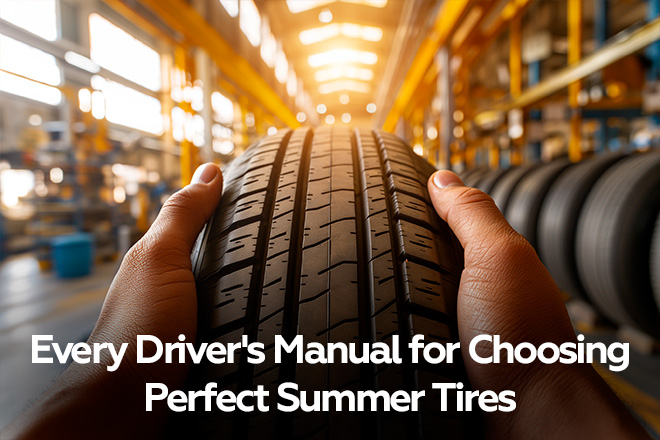
Every Driver's Manual for Choosing Perfect Summer Tires
Discover the ultimate guide to choosing summer tires tailored to your driving style and safety needs. Explore a wide range of tire classes suitable for various vehicles and conditions, with a focus on the benefits of summer tires in warm, dry, and wet environments. Learn about tire sizes, tread patterns, and the right balance between price and quality. Understand the importance of load and speed ratings, and get tips on where to buy authentic tires. This article provides invaluable advice on enhancing your driving experience and safety through informed tire selection
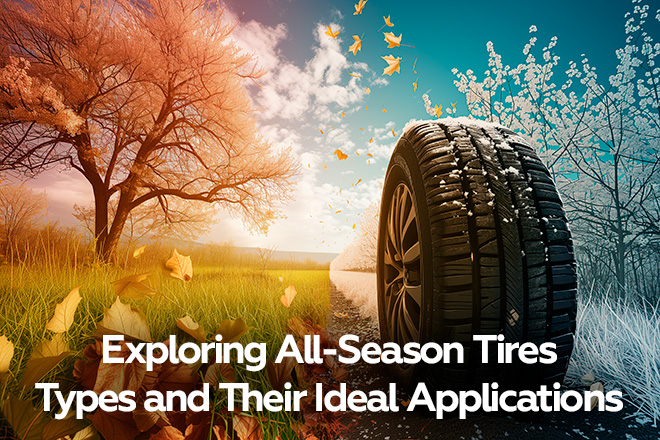
Exploring All-Season Tires: Types and Their Ideal Applications
Navigate the complexities of selecting all-season tires with our detailed guide. Uncover insights into their performance across different climates, unique design features, and practical advantages. Learn about the crucial balance between winter and summer tire demands, and understand the essential factors for making an informed decision based on your driving habits and vehicle type.
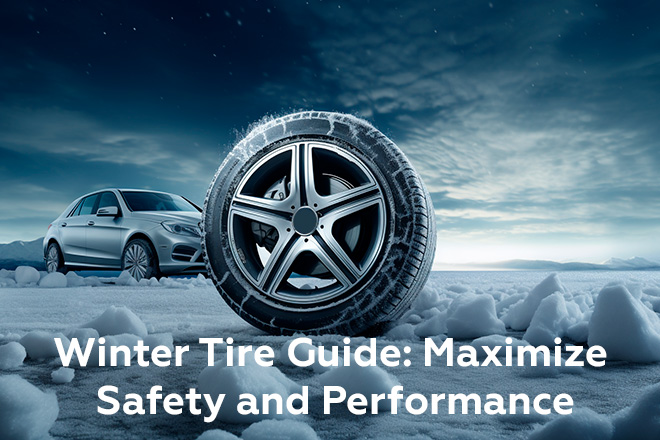
Winter Tire Guide: Maximize Safety and Performance
Introduction Tires, as the sole point of contact between the vehicle and the road, significantly influence driving safety and comfort. Selecting the appropriate tires involves assessing multiple factors, such as driving habits, the type of vehicle, and the specific weather and road conditions of the area. This choice is key…